Camera Dust Removal: Hand Blower or Electric Duster?

Affiliate disclosure: Gear for Greatness may earn a commission from qualifying purchases through our links at no extra cost to you. This research-based guide does not claim hands-on testing of every product.
Controlled airflow is the goal
A blower can remove loose particles from an exterior lens or camera surface without rubbing grit across optical coatings. The aim is careful, controlled cleaning rather than maximum airflow. Begin by identifying where the contamination is located and whether cleaning is necessary.
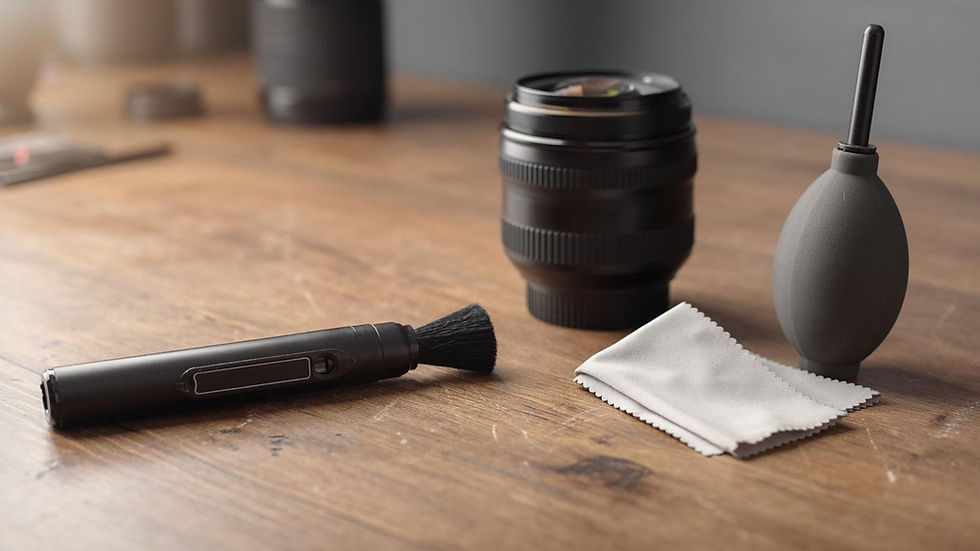
Simple bulb-blower advantages
A squeeze-bulb blower needs no batteries, packs easily and gives direct control over each burst. Keep its nozzle clean and avoid letting it touch the glass. Replace a tool if it is contaminated internally rather than transferring dirt back onto the camera.
Powered airflow risks
Electric dusters vary greatly in force and nozzle design. Strong airflow near delicate parts can shift debris into an opening or disturb sensitive components. An appliance marketed for electronics is not automatically appropriate for optical equipment, and household compressed-air cans may present additional problems.
Sensor cleaning is different
Cleaning inside a camera body demands model-specific precautions. Never direct a strong electric duster toward the image sensor unless the camera manufacturer specifically approves the method. Exterior blower guidance should not be treated as an instruction for internal sensor maintenance.
Dust prevention helps
Store lenses with caps fitted and keep cleaning accessories separate from dirty cables or loose objects. Avoid unnecessary lens changes in dusty wind. A clean bag and suitable protective pouch often reduce cleaning needs more effectively than adding another gadget.
Choose for routine maintenance
For ordinary outside lens dust, a hand blower offers a reasonable balance of control and simplicity. If marks remain, use a manufacturer-approved lens cleaning method after loose particles are removed. Never scrub a gritty surface directly.
Recognize when air is insufficient
A blower is useful for loose dust, but it cannot dissolve oils, fingerprints or adhesive residue. Do not increase pressure endlessly in an attempt to remove a stubborn mark. After safely removing grit, use an optical cleaning method approved for the coating. Keep used cloths separate from clean ones and avoid touching the optical surface with the blower nozzle. Cleaning is maintenance, not an excuse for forceful experimentation on delicate equipment.
Compare current organizers
Check current size, compatibility and seller details before purchasing.


Comments