Camera Lens Dust: Blower First or Soft Brush?

Affiliate disclosure: Gear for Greatness may earn a commission from qualifying purchases through affiliate links at no extra cost to you. This is researched buyer guidance, not a claim of hands-on tests of every product.
Understand the differences
Loose particles can damage a lens coating when rubbed across the surface. First inspect the glass in suitable light and decide whether cleaning is needed. Not every speck visible from the front will affect a photograph, and unnecessarily frequent contact adds risk.
Where the first option helps
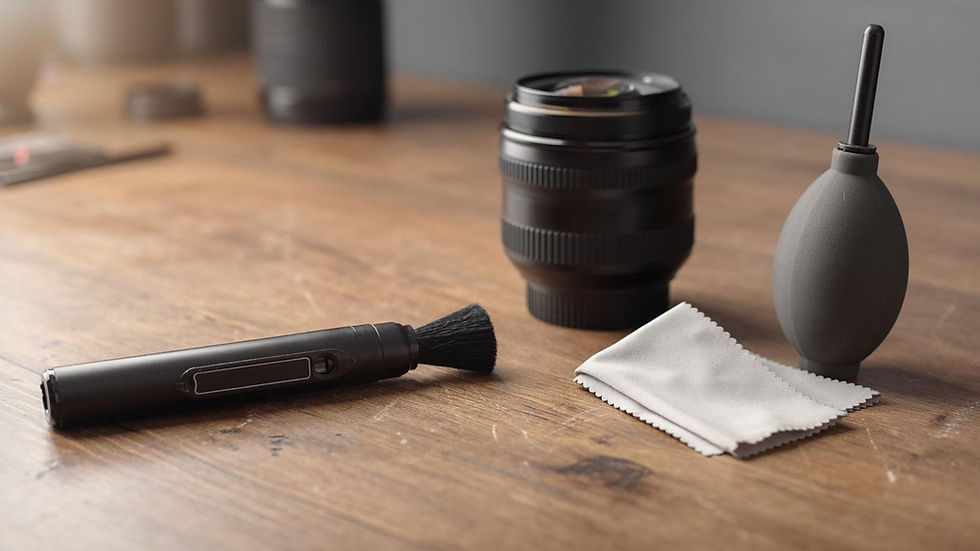
A clean squeeze-bulb blower provides controlled airflow without physically touching the glass. Keep the nozzle a safe distance away and avoid blasting debris towards the inside of the camera. A powered electronics duster may generate more airflow than delicate optical equipment needs.
Where the alternative helps
An optical brush can move dust that remains after blowing, but its bristles must be clean and designed for coated optics. Store the brush protected from sand and grit. Using a paintbrush or a contaminated lens pen risks moving abrasive debris across the surface.
Compatibility and handling
Fingerprints and grease will not vanish with dry air. Once grit is removed, use approved lens-cleaning materials and a suitably clean cloth. Do not spray liquids into the lens mechanism or substitute household solvents without explicit manufacturer approval.
Test before relying on it
Cleaning the front element differs from cleaning the image sensor inside a camera body. Do not assume that an exterior brush or powerful blower is safe on a sensor. Follow the device maker's sensor-cleaning instructions or obtain professional help if the contamination persists.
Choose what fits
For travel, keep a small blower and individually protected microfiber cloth in a clean pouch. Use the blower first for dry surface dust and add a specialised brush only when necessary. Good lens caps and a clean camera bag reduce how often cleaning is required.
Final practical check
A dusty outdoor location is not ideal for opening a camera body or repeatedly removing filters. Keep tools away from damp clothing and other dirty accessories. Examine any cleaning brush before applying it, and replace it if particles are trapped in the bristles. A practical kit should support a careful routine rather than encouraging aggressive cleaning at every stop.
Compare current products
Review the current manufacturer specification, compatibility and seller terms before purchase.


Comments