Drone Propeller Guards vs Protective Carrying Cases for Travel

Affiliate disclosure: As an Amazon Associate, Gear for Greatness earns from qualifying purchases. Links may earn a commission at no extra cost to you. No hands-on product testing is claimed.
Protection begins before takeoff
Drones have exposed moving components and delicate cameras, so protection requires different decisions during flight and during transport. Propeller guards are designed to surround or partially shield spinning propellers on compatible aircraft, while a protective carrying case cushions the powered-off drone during storage and travel. One cannot replace the other. The right purchase depends on the aircraft, the manufacturer's supported flight modes, the type of location you intend to fly and how frequently you travel. Understand what each accessory can and cannot prevent before spending money.
Propeller guards have model-specific limits
Some drones support manufacturer-approved propeller guards intended to reduce contact with nearby obstacles in certain situations. Extra guard weight can affect handling, wind resistance, battery life or permitted operation, and some models restrict functions when guards are fitted. Check the aircraft manual and compatible accessory list. Never fit a guard just because its dimensions look close to the propellers. An incompatible guard can interfere with moving blades or sensors, creating a greater danger than flying without it.
Guards do not make a drone harmless
A guard may reduce the chance of an exposed blade directly contacting an object, but it does not eliminate injury, collision or property-damage risks. Do not deliberately fly close to people, pets, windows or structures because a guard is attached. Respect required separation and local rules. Check whether the accessory changes the aircraft's physical dimensions or operating weight in a way that affects regulatory requirements. The safest approach to a crowded area is often not to fly at all.
A carrying case protects a different phase
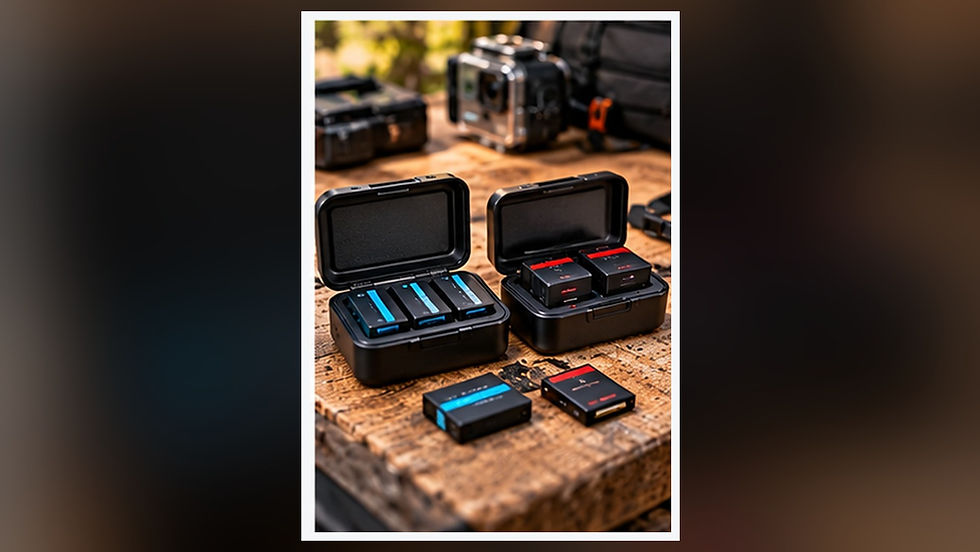
A well-fitting case can limit pressure on folded arms, the camera gimbal and exposed connectors when equipment is packed. Some cases use shaped foam or padded dividers; others use rigid shells. The appearance of a hard shell is not proof of waterproof or crushproof performance. Check stated ratings and whether the case closes without pressing against delicate components. Protect spare batteries according to their own transport requirements, and avoid loose metal objects that could contact battery terminals.
Gimbal and camera protection
The drone's camera and gimbal are often vulnerable to twisting or pressure during travel. Use only the manufacturer-approved gimbal protection or supported storage procedure. A case should hold the camera without forcing the stabilizer beyond its normal travel range. Check whether lens filters, extended landing gear or other accessories must be removed before packing. If a case is marketed as compatible, verify the exact aircraft variant rather than assuming every generation has identical dimensions.
Travel rules for batteries
Lithium battery transport requirements can vary by carrier, battery energy rating and destination. Airlines often restrict spare lithium batteries in checked baggage and require terminals to be protected. Always check the applicable airline and transport authority guidance before departure. A convenient case compartment does not override these rules. Store batteries away from sharp objects and keep them at temperatures recommended by the manufacturer. Never carry swollen or damaged batteries as ordinary travel equipment.

Weight and packing space
A rigid case may provide more structure but can occupy substantial luggage space. A padded insert or smaller case can be practical when the drone fits into a larger daypack with other filming gear. Balance protection with portability and access. An oversized case that is rarely brought along offers no benefit during the actual trip. Propeller guards also take space, and some require removal before storage. Consider whether the complete kit can be prepared safely without handling tiny fasteners in windy locations.
Inspect accessories before every flight
Check propeller guards for cracked plastic, loose fasteners or warped sections that might interfere with the aircraft. Inspect the propellers themselves and replace damaged blades according to manufacturer instructions. Before launch, verify that the aircraft performs its normal self-checks and that sensors and cooling vents are unobstructed. If the drone behaves unexpectedly with an accessory installed, stop and investigate safely. Do not attempt a risky test flight simply to prove that a new attachment works.
Buying checklist
Confirm the exact aircraft model and any approved propeller-guard part number. Check weight changes, flight-mode restrictions and installation instructions. For cases, compare internal fit, gimbal clearance, cushioning, carrying comfort, storage for cards and battery handling. Review the seller's photographs carefully but use manufacturer specifications as the authority. A cheap accessory that introduces interference or fails to protect the camera can be a poor value. Prioritize compatible gear and careful operation rather than maximum accessory count.
Frequently asked questions
Do propeller guards prevent crashes? No; they provide limited protection in specific situations. Can guards be fitted to every drone? No, compatibility and operating restrictions vary. Is a hard case necessary for air travel? Not always, but suitable protection and proper battery handling are important. Can batteries be stored loose beside tools? No; terminals need protection. Does a case make the drone waterproof? No; a case's environmental rating, if any, applies only under its stated conditions.
Compare gear on Amazon
Option 1 — Compatible Drone Propeller Guards
Option 2 — Protective Drone Carrying Cases
Amazon links open search results. Verify the actual model, compatibility, pricing, availability, shipping and return terms.


Comments