Tech Organizer Pouch vs Compartment Case for Travel Cables

Affiliate disclosure: As an Amazon Associate, Gear for Greatness earns from qualifying purchases. We may earn a commission at no additional cost to you. No hands-on testing is claimed.
The problem is finding the right cable quickly
A pouch filled with loose USB-C leads, power adapters, memory cards and dongles can become a frustrating tangle on a filming day. Good organization means identifying the correct item without emptying the entire bag. Soft fabric organizer pouches compress into luggage and commonly provide elastic loops or pockets. More rigid compartment cases retain their shape and can protect small items from pressure. Neither arrangement is perfect for every load; what matters is that your actual accessories have accessible, secure places.
Soft pouches flex around changing kits
An organizer pouch can accommodate several cable lengths and charger shapes without demanding a specific layout. It may fit into the unused space of a travel backpack more easily than a hard-sided case. The disadvantage is that soft walls offer limited protection if heavy items press against delicate connectors. Inspect zipper quality and seam reinforcement, particularly where small accessories might escape. A generous pocket is not necessarily useful if small card adapters settle unseen into the bottom.
Compartment cases keep objects separated
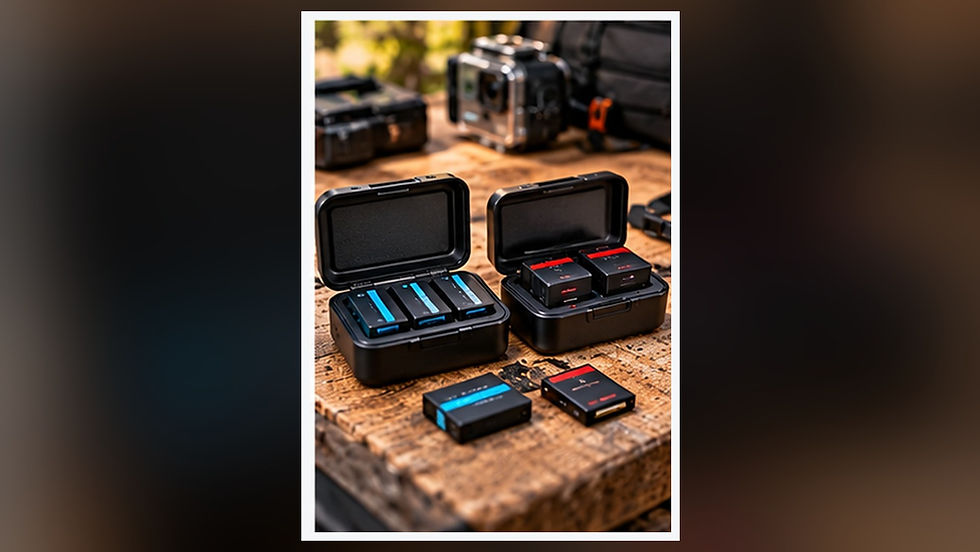
A rigid case with adjustable dividers can hold batteries, memory-card wallets and small adapters in recognizable positions. Sections make it easier to see missing items at the end of a shoot. The trade-off is bulk: empty space within the shell still occupies room in a bag. Check the divider design so that small parts cannot migrate underneath it. A hard case is not automatically crush-proof or waterproof. Read its actual construction and rating rather than assuming every protective-looking case meets a formal standard.
Do not mix loose batteries with metal objects
Spare lithium batteries deserve specific care regardless of the organizer style. Protect exposed terminals using the recommended cases or terminal covers and follow the manufacturer's transport and storage instructions. Never toss batteries into a compartment with keys, coins or loose metal adapters. An electronics pouch is also not a suitable storage place for visibly swollen, damaged or unusually hot batteries. Follow applicable travel rules and dispose of damaged batteries through appropriate channels.
Label cables by capability
USB-C cables can look identical while offering different charging power, data rates or display support. Small labels or clearly separated loops prevent reaching for the wrong lead when connecting a camera, portable drive or monitor. Avoid writing unverified capability claims on a cable; use the manufacturer documentation or reliable identification. Store frequently accessed charging cables where you can reach them first, and place less common adapters in a separate pocket. Organization should support the workflow, not just create an attractive photograph.

Plan around the largest charger
A compact pouch may fit all your short cables but bulge around a large GaN power adapter or multiport charger. Measure the actual dimensions of the biggest item, including plug prongs and cable bends, before ordering. Check whether the case can close without placing pressure on connectors. If you carry a portable SSD or other delicate device, consider padded separation instead of treating it like an ordinary cable. Avoid leaving a hot charging adapter inside a closed fabric case while operating it.
Moisture and outdoor use
A water-repellent pouch can be useful for small travel mishaps, but a zipper and woven fabric may not keep electronics dry during prolonged rain. When filming outdoors, use an appropriate protective dry bag or weather-rated enclosure as needed. Keep damp charging cables separate from dry electronics until they can be inspected and dried properly. Do not connect wet equipment to power. A rigid case may seal more effectively only if it has an actual tested seal and is closed according to the manufacturer instructions.
Ease of access matters in public places
If you must open the organizer while standing on a crowded sidewalk or boarding a train, a compact layout with clearly defined pockets is valuable. Avoid styles that require every cable to be removed to reach the memory-card wallet. Use a small tethered pouch or secure inner section for particularly important adapters. An organized pack also helps reduce the time expensive equipment remains exposed in public. Test the arrangement at home by retrieving a particular cable without looking at every pocket.
Buying checklist
Lay out everything you actually carry and group the items by purpose. Measure chargers, cables and storage accessories, then compare internal organizer dimensions. Check zipper design, divider flexibility, weight, padding, moisture claims and how the case fits your existing backpack. Prefer a layout with spare room for one realistic accessory, not a case twice the necessary size. Check that the organizer will not encourage unsafe battery storage or tight cable bends.
Frequently asked questions
Is a hard case always better for electronics? No; protection depends on the item, case construction and packing. Can a fabric pouch protect a portable SSD? Some padded designs help with ordinary carrying, but avoid heavy pressure and impacts. Do I need separate sections for every cable? Not necessarily; grouping by capability or use may be faster. Can an organizer fix intermittent charging? No. It can help protect and identify cables, but a damaged lead or poor connector still needs attention.
Explore equipment on Amazon
Option 1 — Soft Fabric Tech Organizer Pouches
Option 2 — Rigid Compartment Organizer Cases
Links lead to Amazon search pages. Confirm exact item specifications, compatibility and seller terms before buying.

Comments