65-Inch Premium TV vs 75-Inch Midrange: Which Is Better Value?

Affiliate disclosure: As an Amazon Associate I earn from qualifying purchases. Gear for Greatness may receive a commission through the links below, at no additional cost to you.
Quick verdict
For a 65-inch premium vs 75-inch midrange TV decision, choose the larger screen when your seating makes the smaller one feel distant and the midrange picture already satisfies you. Choose the premium 65-inch when its specific picture advantages matter more than extra image size.
This is a research-based buying guide using the manufacturer and standards sources linked below. It does not claim hands-on testing or original performance measurements. Cover artwork is an AI-generated concept illustration of a viewing setup, not a photograph of a tested product; the separate diagram explains the buying decision.
The size increase is more than the diagonal suggests
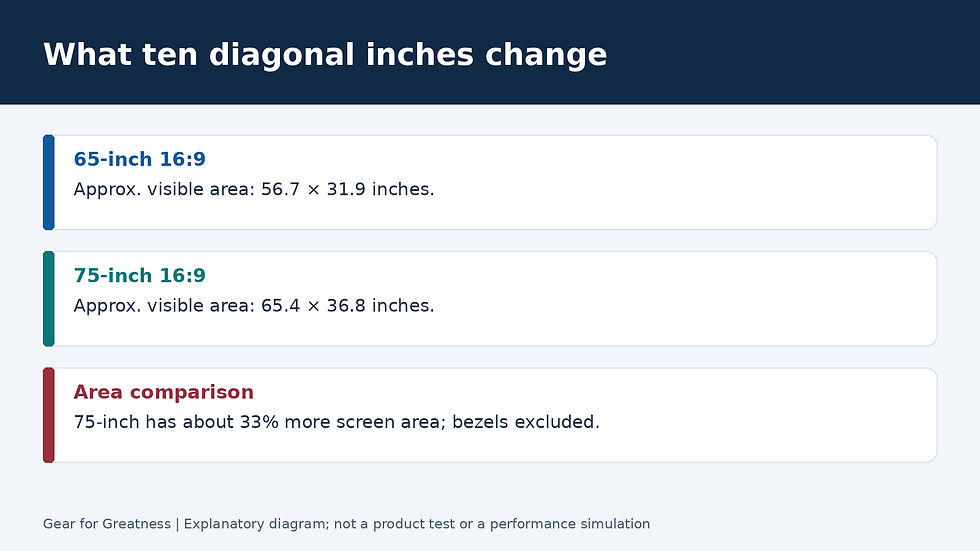
For two 16:9 screens, image area scales with the square of the diagonal. Dividing 75 squared by 65 squared gives about 1.33, so the 75-inch picture has roughly one-third more area. This is a geometry calculation, not a claim about either model’s picture quality.
Approximate visible picture widths are 56.7 inches for 65-inch and 65.4 inches for 75-inch. Real product dimensions include the bezel and stand. Use the manufacturer’s measurements when checking a cabinet, lift, doorway or wall space.
Start from the seat, not the display shelf
Measure the distance from your normal seated position to the screen. Then mark the two approximate picture outlines on the wall with removable tape. This does not reproduce a television, but it helps reveal whether the bigger screen would dominate the room or make viewing more comfortable.
Try familiar content at a comparable distance in a shop if possible. Include subtitles, faces and wide landscapes. Size recommendations are starting points; eyesight, preferred immersion and the way the room is used differ between households.
What the smaller premium set must prove
The premium option needs an advantage you can identify: perhaps less distracting blooming, more comfortable reflections, better side-seat appearance or more suitable gaming inputs. Do not assume a higher price improves all four.
Keep the picture source and settings comparable. A brighter shop mode on one screen can overwhelm a more restrained accurate mode on another. Ask to compare a normal programme, and examine the details you care about rather than the brand’s promotional loop.
When the bigger midrange television wins
A bigger screen is attractive for a room with distant seating, shared sports viewing or films where you want greater immersion. If you already find the midrange picture pleasing, the increase in size may be the benefit you notice every time you watch.
The tradeoff becomes less attractive if you are bothered by the particular panel’s reflections or dark-scene behaviour. Enlarging a screen also enlarges visible source flaws. Check the broadcasts and streaming quality you normally receive, especially if much of it is below 4K.
Who should skip either option
Skip the 75-inch if the stand will not fit, transport is awkward or you would have to place it uncomfortably high. Skip the premium 65-inch if its extra capabilities are mainly impressive on a spec sheet and the picture still feels too small from your sofa.
Budget for delivery and the installation your room needs. Check stand-foot spacing, VESA compatibility, television weight and the manufacturer’s support requirements. A suitable product is better value than a bargain that creates additional placement costs.
Best value and final choice
Buy the 75-inch midrange television if size is the limitation you are solving and you are happy with its picture in realistic lighting. Buy the premium 65-inch if a fair comparison reveals an improvement you value more.
If neither resolves the compromise, keep your current set and wait for an appropriate sale rather than forcing a purchase. Regional search links below are starting points for comparison, not confirmation that any listed product is the right price or available locally.


Comments