Godox V100 vs V1Pro: Touchscreen or Familiar Controls?

The Godox V100 vs V1Pro decision comes down to how you change settings and how often you need maximum manual output. Both are round-head rechargeable camera flashes aimed at photographers who want an on-camera light that can also join a Godox radio setup. This comparison uses manufacturer specifications, rather than hands-on test results.
As an Amazon Associate I earn from qualifying purchases.

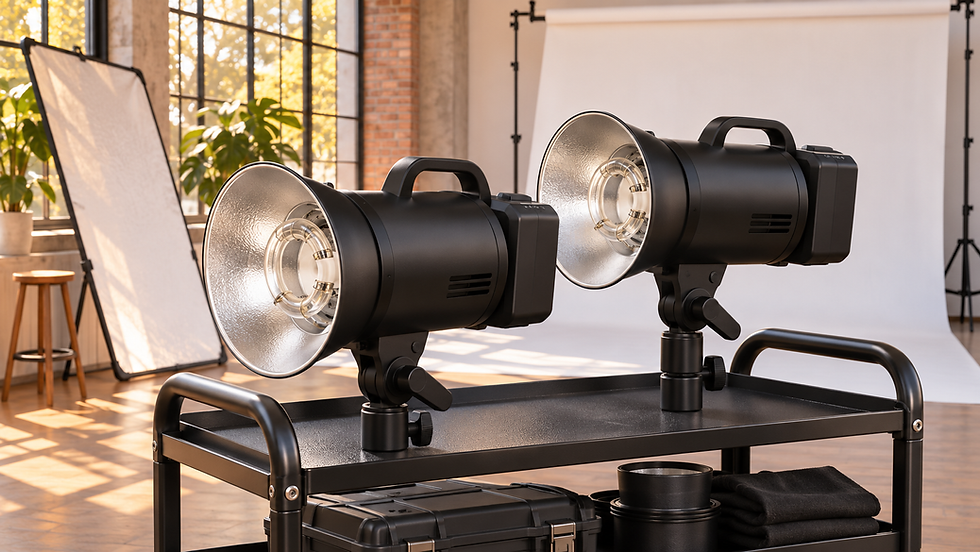
Illustration of a round-head flash setup; generic devices are not exact product photographs.
Quick verdict
Choose the V100 for its touchscreen and higher maximum manual energy setting. Choose the V1Pro if its established controls suit you and you do not need the V100's extra output. Neither removes the need to match the flash version to your camera.
At a glance
Start with the light you actually need
A round head changes the shape of the beam leaving the flash, but flattering portraits still depend on light size, direction and distance. Bouncing either flash from a nearby neutral ceiling can create a very different result from pointing it directly at a face. A small diffuser does not turn a camera flash into a large softbox.
The V100's higher energy ceiling can be useful when bounce distances increase or a modifier absorbs light. Treat watt-seconds as an energy specification, not a promise that one flash produces a measured brightness advantage in every setup. Head position, zoom and accessories affect the delivered light.
Decide whether touch controls improve your work
The V100 makes its touchscreen a central part of operation. That is appealing if you prefer seeing settings together and tapping directly into them. Before buying, consider how you work while holding a camera, wearing gloves or moving quickly between horizontal and vertical framing.
The V1Pro suits photographers who prefer learning a repeatable button-and-dial sequence. An upgrade is easier to justify when the interface solves a repeated problem during paid work. If you already change V1Pro settings without looking for controls, a different interface may add less value than another light stand or modifier.

Use the sub-flash deliberately
Both models offer the detachable SU-1 secondary flash. It provides another lighting option when the main head is bounced. It is useful to think of this as a way to add frontal fill, rather than a guarantee of a better portrait whenever it is attached.
Start with a restrained setting and check the effect on faces, glasses and nearby reflective surfaces. Too much direct fill can flatten the shadows you were trying to create with bounce lighting. Neither model replaces the positioning flexibility of a separate off-camera light.
Check the camera version and radio setup
Buy the exact camera-system variant and check Godox's current compatibility list for your camera body. A shared hot shoe shape does not establish full TTL, autofocus-assist or high-speed-sync support. Firmware and camera shutter settings can also affect which features are available.
The common X radio system is helpful when expanding beyond one flash, but you still need an appropriate transmitter and compatible receiver settings. Match channel, wireless ID and group before the session. If you use high-speed sync, expect a different usable-output tradeoff from ordinary sync operation.
Compare the complete working kit
Godox specifies the same battery type for these two flashes, which can simplify carrying spares when both are in a kit. Confirm the precise battery and charging accessories supplied by the seller, especially if a listing mixes regional bundles or offers only a flash body.
Compare the delivered cost with the correct camera suffix, warranty, spare battery and the modifiers you intend to use. Keep a working V1Pro if it already meets your needs; choose the V100 when the interface or output ceiling has a clear purpose in your shooting routine.
Final choice
The V100 is the more compelling choice when touch operation and additional manual energy solve a real limitation. The V1Pro remains a sensible round-head option for photographers who value familiar controls. Choose the compatible version first, then judge the upgrade by your actual lighting setup.
Sources and further reading
Related buying guide
For the earlier round-head upgrade decision, read Godox V1Pro vs V1.


Comments