
Overhead Phone Boom vs Camera Tripod for Flat-Lay Photography

The shot determines the support
Flat-lay photographs and unboxing videos look best when the camera's viewpoint reveals the objects clearly. A dedicated overhead boom aims a camera straight down. A traditional tripod is better for versatile still photography and can sometimes support a high three-quarter angle, but not every model allows safe true overhead framing.
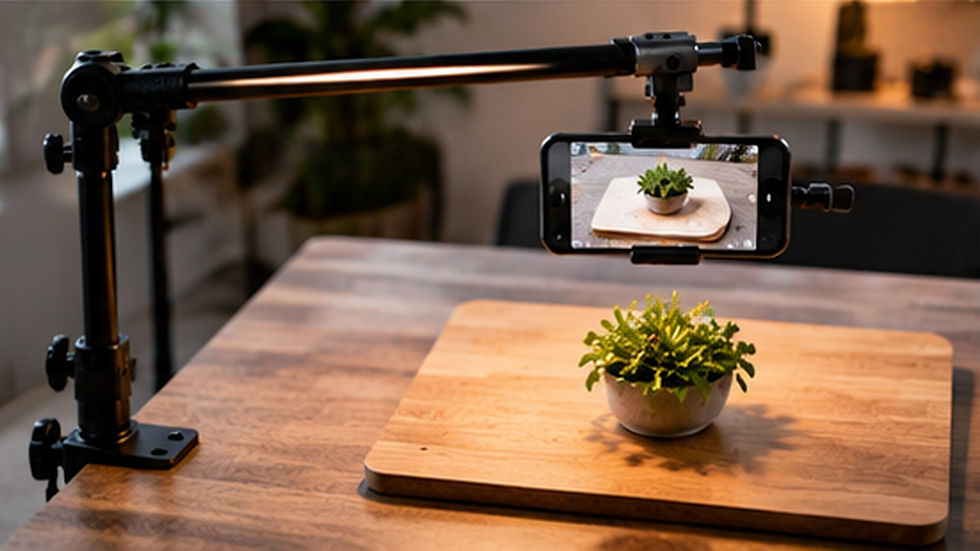
An overhead mounting system
A desk-mounted overhead arm moves the lens away from the support column and keeps the table clear of tripod legs. That creates leverage at the desk clamp. A lightweight phone can still drop if the holder slips or the desk edge bends. Check the table's rigidity before comparing manufacturer payload ratings.
A tripod's advantages
A conventional tripod is more useful for outdoor scenes, portraits and product photographs from the side. Its stability depends on leg placement, height and centre-column extension. Some models can use a separate lateral arm, but you must check actual compatibility rather than assume any add-on boom fits.
Practical flat-lay tips
Mark where the product should sit, centre the lens above the arrangement and fix exposure and white balance. Leave enough margin around the edge for labels and for later vertical crops. Avoid having the shadow of the camera itself fall over the product by moving the light off-axis.
Where people overspend
An expensive boom does not improve an uneven background or inadequate light. A low-price tripod can be perfectly sufficient for side-view unboxings. Purchase the more complex system only if you repeatedly need a composition you cannot achieve safely with existing gear.
What to measure
Check table-edge thickness, extension length, camera weight including all accessories, mount thread and cable clearance. Test at a low height with a safety tether. Do not improvise a suspended camera on a flimsy folding-table lip.
Final verdict
Choose a rated overhead mount on a rigid desk for frequent true flat-lay work. Choose a reliable tripod for general photography and portable filming. You may eventually use both, but start with the view your content needs most often.
Affiliate disclosure and research limits
This guide explains the equipment choices and relevant manufacturer-stated product categories; it does not claim first-hand testing or verified current stock. Its unique 16:9 image is AI-generated editorial imagery, not a product photograph. As an Amazon Associate, Gear for Greatness may earn from qualifying purchases. The separate country buttons below are clearly labelled Amazon searches; confirm the exact model, accessories, listing and price before buying.


Comments