Godox V480 vs V860III: Compact Touchscreen or Longer Zoom?

The Godox V480 vs V860III choice is useful for photographers deciding whether to carry a smaller flash or keep the broader zoom range of a larger model. Both use rechargeable batteries and can work in a Godox X radio setup. The differences below come from official product information and manuals, not a hands-on shootout.
As an Amazon Associate I earn from qualifying purchases.

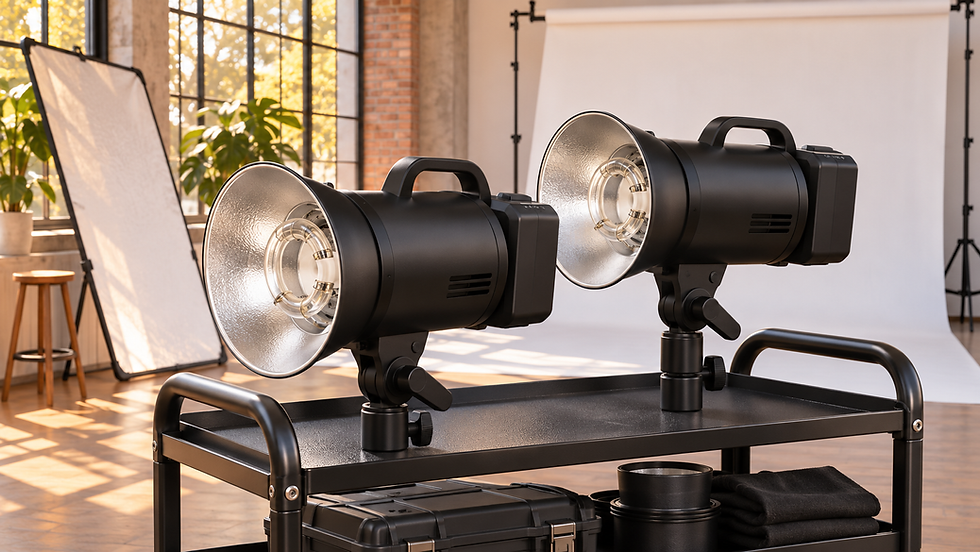
Illustration of generic flash sizes and a camera bag; not exact product photographs.
Quick verdict
Choose the V480 for lower carried weight and a touch interface. Choose the V860III when its longer zoom coverage and familiar physical controls suit your work. Match the correct camera-system version before comparing bundles.
At a glance
Weight matters when the flash stays on the camera
The V480's lower stated weight is a practical reason to choose it for a small mirrorless body or a long afternoon of family photographs. The difference is less about a bag on a shelf and more about holding the camera repeatedly with the flash above the lens. Include your lens and grip when judging the balance.
A larger flash can still be comfortable on a substantial camera body. If you normally place the light on a stand, the weight difference may have little influence on the final setup. Decide where the flash will spend most of its time before treating compact size as the main advantage.
Touchscreen convenience or longer zoom reach?
The V480 combines touch operation with physical buttons. It is a sensible option for photographers who want a clear visual interface without giving up every tactile control. Consider whether its menus make group and power changes easier for you rather than assuming newer controls are automatically faster.
The V860III extends its zoom setting to 200mm, compared with the V480's 105mm limit. That can be useful for concentrating direct flash on a smaller area. It does not make the camera lens longer, and it is less decisive when light is being spread through an umbrella or bounced over a broad surface.

Do not rank output using unmatched guide numbers
Guide numbers are meaningful only alongside the stated coverage, ISO and measurement conditions. A narrow zoom setting concentrates the beam and can raise a published guide number without telling you how evenly a wider scene will be lit. Avoid comparing a 105mm rating with a 200mm rating as if they were an identical test.
For bounce portraits, think about ceiling height, subject distance and the aperture you need. Neither flash eliminates the light lost through a modifier or a long bounce path. If you regularly struggle for output, a more substantial off-camera lighting setup may be more useful than changing between these two shoe-mount models.
Confirm camera and radio compatibility
Select the C, N, S, F or O version appropriate to your camera system, then check the current body-specific compatibility list. TTL, high-speed sync and autofocus-assist behavior can vary. A matching brand name alone is not a substitute for checking the exact camera and firmware requirements.
For wireless use, confirm the transmitter version and set matching channels, IDs and groups. Both flashes belong to the Godox X system, but that does not mean a flash mounted directly on any camera will gain every feature. Test the intended triggering arrangement before an event.
Compare the complete carrying and charging plan
Verify the battery model, charger or cable and any accessories included in each listing. Do not assume that two lithium-powered flashes use interchangeable batteries. A spare should match the manufacturer's specified pack, and the charging arrangement should fit how you work between sessions.
The V480 is attractive when a smaller everyday kit means you will actually bring a flash. The V860III remains a purposeful choice for a photographer who uses the extended zoom setting or already has compatible batteries and modifiers. Compare the complete replacement cost with the benefit you expect to use.
Final choice
Pick the V480 for a lighter camera-mounted setup with touch controls. Pick the V860III for its 20–200mm zoom coverage and established button-and-dial workflow. Your camera compatibility and existing accessories should settle the final purchase.
Sources and further reading
Related buying guide
If head shape is the next decision, compare Godox V860III vs V1Pro.


Comments